BMX Playground
Lemon GlobalSports
4.470.00 Reviews
- Version
- 1.27
- Installs
- 5.00M
- Age Rating
- Everyone
Screenshots
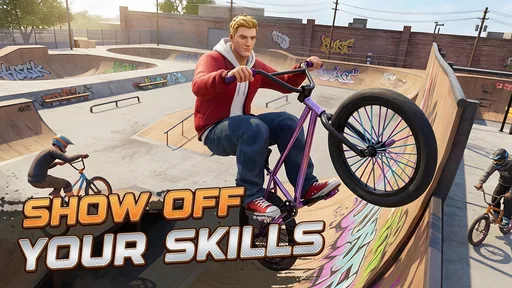
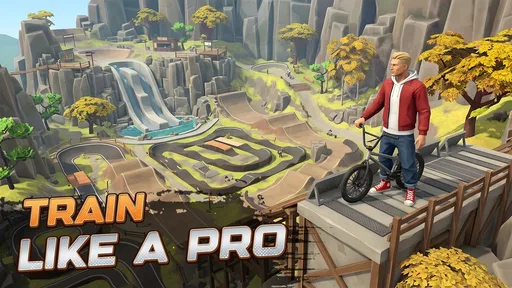
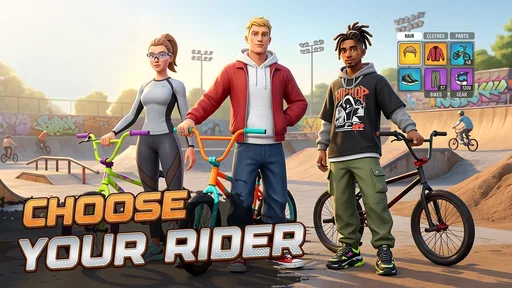
Our Review of BMX Playground
 Analysis by Appyee
I approached BMX Playground expecting a simple sports game built around riding and landing tricks. After spending time with it, I found something more relaxed and playful: a BMX space where the pleasure comes from trying a line, missing it, adjusting, and immediately attempting it again. It is free to play, made by Lemon Global, and its focus is easy to understand from the first ride. You are not managing a team or following a long career structure; you are using a bike, a course, and your own curiosity to create movement.
That simplicity is the game’s strongest quality, but it also defines its limits. I enjoyed it most when I treated each session as a short creative break rather than a serious sports simulation. The game is listed for Everyone, works on devices running Android 7.1 or later, and has reached over a million installs. Its average rating is 4.8 from around 3,700 ratings, which fits the immediate appeal I felt, although the experience will not satisfy someone looking for deep competitive progression or a highly realistic BMX model.
From a quick ride to a playable mood
I found that BMX Playground works best when I treat its open space as an invitation to invent a small goal, not as a course I need to conquer. This section looks at how that freedom shapes a quick session and why choosing a simple intention before riding can make the game feel more rewarding.
The first few minutes are about curiosity
The opening impression is deliberately direct. BMX Playground puts the bike at the centre of the experience and encourages experimentation instead of asking me to learn a complicated system before having fun. I could begin by moving around the space, testing jumps, and seeing how much control I had over a trick. That low barrier matters on a phone because mobile sessions are often interrupted. I could play for a few minutes, close the game, and return without feeling that I had forgotten a large set of rules.
The setting also gives the game a useful sense of openness. Rather than making every moment feel like a race against a clock, the playground framing makes failed attempts feel less punishing. I was more willing to repeat a jump from a different angle because the environment suggested that discovery was part of the point. The result is a gentle first impression: the game wants me to play with the bike, not simply complete a checklist.
There is a practical trade-off here. Players who want immediate goals, opponents, or a clearly signposted campaign may find the early experience too loose. The open playground is appealing when I choose my own objective, but it can feel less motivating if I need constant rewards to keep moving forward. I would recommend starting with a small personal challenge, such as finding one reliable jump and improving the landing, instead of waiting for the game to provide a dramatic structure.
A good fit for short everyday sessions
My favourite use case is a short break when I want something more active than a puzzle but less demanding than a full racing game. Imagine waiting for an appointment or taking a few minutes after work: I can enter, ride around, attempt a handful of flips, and stop after one satisfying landing. The game does not require the same concentration as a long competitive match, yet it still gives my hands something meaningful to do.
That makes it particularly suitable for players who enjoy experimenting with movement. Younger players can approach it as a colourful sports toy, while older players may appreciate the small satisfaction of refining a route. The Everyone rating supports that broad accessibility, though younger users may still need normal family guidance around optional purchases. The game is free, with individual in-app items priced between $2.99 and $3.99, so I would keep that in mind before handing a device to a child.
What the visual language communicates
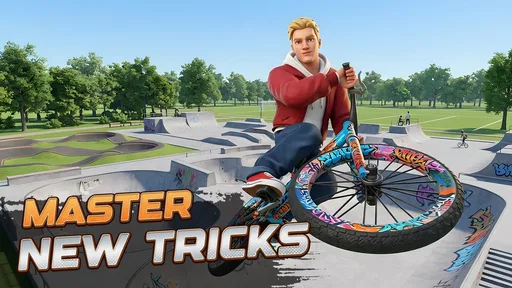
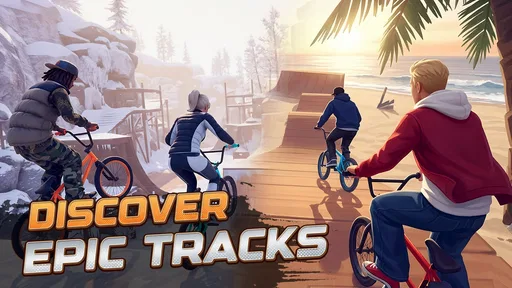
The art direction works because it supports the fantasy of an accessible BMX playground rather than trying to turn the game into a documentary about professional riding. The environment reads as a place built for movement: surfaces, ramps, and open areas become invitations to test momentum. Even when I was not pursuing a specific stunt, the setting gave me a reason to keep riding because each visible feature suggested another possible line.
I found the visual approach most effective when it stayed readable during motion. In a trick game, decoration should not make it difficult to judge where the bike is going to land. BMX Playground benefits from keeping the main action understandable, especially on a smaller screen. I could focus on the relationship between the rider, the bike, and the next surface instead of treating the scene as a static backdrop.
The design also shapes the emotional tone. A more realistic presentation might make crashes feel embarrassing or expensive, while this playground mood makes them part of the learning loop. I could try something ambitious without feeling that a failed attempt had ruined a long run. That is a subtle but important choice: the art does not merely make the game look pleasant; it tells me how seriously to take failure.
How the setting changes the way I play
An open BMX space encourages me to think in lines rather than isolated buttons. I began looking at a ramp, then the landing area beyond it, and finally the next surface that could continue the movement. That way of reading the environment is more interesting than simply tapping for a trick whenever an icon appears. The setting becomes a kind of visual sentence, with each ramp acting like punctuation between actions.
A useful approach is to ride through an area once without attempting anything ambitious. I can learn where the bike naturally gains speed, which surfaces give me a clean launch, and where a landing is likely to become awkward. On the second pass, I choose one feature and repeat it. This sounds simple, but it prevents the common mobile-game habit of pressing everything at once and then blaming the controls for a mistake caused by poor positioning.
Another practical insight is to treat the camera and the approach angle as part of the stunt. A trick may be possible from one direction but uncomfortable from another because the landing becomes harder to read. I had better results when I set up the bike first, then committed to the action, rather than improvising every input in the air. The game rewards a little preparation even though it remains casual overall.
Sound that supports movement without taking over
The sound design contributes to the game’s mood by keeping attention on riding and impact. I experienced it as a supporting layer rather than a separate attraction. The important audio moments are tied to movement: the sense of launching, turning, and touching down gives a trick more presence than silent animation would. That helps the playground feel active without making it noisy or overly dramatic.
This restraint suits the pacing. BMX Playground does not need an aggressive soundtrack to convince me that a jump matters. The visual motion and the timing of the landing do most of the work, while the sound helps confirm whether the action felt clean. When the audio and animation agree, a modest trick can feel rewarding because the game gives it a clear beginning and end.
I would still suggest playing with the volume at a comfortable level rather than expecting the audio to carry the whole experience. The game’s appeal comes from the combination of sight, timing, and physical response. If someone wants a music-heavy sports game with an intense competitive atmosphere, this is probably not the best match. Its sound belongs to a more relaxed space where the player can concentrate on rhythm and repetition.
Finding a rhythm instead of chasing speed
The pacing is strongest when I stop trying to rush. A successful sequence often depends on a calm approach, a controlled launch, a brief moment of adjustment, and a landing that leaves enough room for the next move. That rhythm makes the game feel closer to practicing a routine than winning a race. I enjoyed the pauses between attempts because they gave me time to decide whether to repeat a familiar line or try something riskier.
This is also where the sound and setting work together. The open space gives the movement room to breathe, while the audio marks the important contacts with the environment. I could feel a short sequence becoming coherent when the bike moved from one surface to another without an awkward stop. The game’s mood is therefore created through pacing as much as through colour or scenery.
Where the mechanics fit the presentation
The central mechanical fit is convincing: a playful BMX environment is paired with controls that invite repeated attempts. Riding, flipping, and performing stunts make sense in a space designed for free movement. I never felt that the setting was promising one kind of experience while the mechanics delivered another. The game presents itself as an open place for BMX experimentation, and that is how it plays.
Its accessibility comes with a cost. A forgiving sports game can make early success feel satisfying, but experienced players may eventually want more precision, more demanding objectives, or a stronger reason to master advanced movement. BMX Playground is better understood as a freestyle playground than as a technical simulator. If I want to analyse professional riding technique, I would choose a more specialised alternative. If I want to practise creative lines casually on a phone, this game makes the better case.
The most useful habit I developed was separating setup from execution. First, I positioned the bike and checked the approach. Then I committed to the jump and focused on the landing. Finally, I decided whether to continue the line or reset. This three-step workflow reduced random failures and made the controls feel more predictable. It is a small technique, but it changes the experience from button pressing into deliberate riding.
Why repetition works here, and when it does not
Repetition is the game’s main source of depth. I replayed the same kind of movement not because a story demanded it, but because I wanted to make the sequence cleaner. That loop is satisfying for players who enjoy self-imposed goals: land without stopping, connect two features, or find a route that looks smooth rather than merely possible.
However, this also identifies the audience that should skip it. If you need a strong narrative, detailed rider development, structured tournaments, or constant unlocks, the open-ended design may feel thin. It is also not the right choice for someone who dislikes trial and error. Stunts naturally involve failed landings, and the game’s pleasure depends on being willing to try again without needing every attempt to produce a reward.
Compared with a conventional racing game, this offers less pressure and more personal control over the shape of a session. Compared with a pure arcade trick game, the playground setting gives me more room to plan a route. Compared with a serious BMX simulator, it is easier to approach but less demanding as a technical exercise. That middle position is the clearest way to understand its value.
Device expectations and purchase judgement
The current version is 1.23, and the minimum Android requirement is 7.1. That makes the game approachable for people who are not using the newest phone, although smooth movement will still depend on the individual device. For the best experience, I would close unnecessary background apps before playing and keep the screen clean enough that finger movement does not obscure the landing area.
Because the game is free to start, it is easy to test whether its open-ended rhythm suits me before spending anything. I would not purchase an optional item simply because I felt stuck; the better question is whether it adds something meaningful to the way I already enjoy riding. The listed purchase range is $2.99 to $3.99 per item, so the sensible approach is to play several short sessions first and decide whether the core loop has earned further investment.
The game’s broad reach is understandable. It has passed a million installs, and its 4.8 average from roughly 3,700 ratings suggests that many players respond positively to its accessible stunt-focused format. I would treat those figures as a sign of strong initial appeal, not as proof that it will suit everyone. A high rating cannot remove the central trade-off between a relaxed playground and a more structured sports game.
The atmosphere in the context of the genre
What stays with me is the coherence between the game’s setting, sound, and mechanics. The playground environment says experimentation, the audio gives movement a sense of timing, and the BMX controls turn that invitation into something playable. None of those parts is trying to become more important than the others. Together, they create a mood that is casual but not empty, especially when I set my own small targets.
The atmosphere is also helped by the absence of unnecessary urgency. I can spend time preparing a line, make a mistake, and immediately reconsider the approach. That pacing would be a weakness in a competitive sports title, but here it is central to the identity. The game gives me permission to ride for the feeling of movement rather than for a scoreboard.
My main reservation is that this same freedom can lose its pull once I have exhausted my personal ideas. Players who naturally invent challenges will get more from it than players who depend on a long progression path. I also think the game works best in short or medium sessions; extended play can expose the limited variety of its central loop more quickly.
My recommendation after riding with it
I recommend BMX Playground to anyone who wants a free, approachable sports game built around stunts, movement, and experimentation. It is especially enjoyable for casual players who like discovering how a space can be used, and for anyone who wants a quick game that does not demand a full competitive mindset. Lemon Global has made a focused experience, and the focus is clear from the way the environment and mechanics reinforce one another.
I would choose a different game for realistic BMX training, deep career progression, story-driven play, or serious online competition. Those expectations would make the open playground feel underdeveloped rather than freeing. But if the idea of taking a bike into a colourful space, testing a jump, listening for the landing, and improving one line at a time sounds appealing, this is a strong fit.
In the end, the best way to enjoy BMX Playground is to bring your own small goals. Try a route without stopping, approach a ramp from a new angle, or simply make one trick cleaner than the last attempt. Its art direction and sound do not distract from those choices; they give them a consistent mood. For me, that makes the game a pleasant freestyle break rather than a disposable stunt demo, with enough personality to recommend while still being honest about its deliberately light structure.
Privacy and Permissions
See what permissions an app requests and how it handles your data.
- Wi-Fi connection information
- view Wi-Fi connections
- Other
- view network connections, full network access, control vibration, prevent device from sleeping, Google Play license check
Verdict
Strengths of BMX Playground
- Simple controls make it easy for beginners to start riding.
- Trick-focused gameplay rewards experimentation and creative combinations.
- Short sessions work well for quick play on mobile devices.
- The BMX theme offers a refreshing alternative to typical racing games.
- Offline play is useful when you have no internet connection.
Limitations of BMX Playground
- Limited content may make the experience feel repetitive over time.
- Some tricks require precise timing and can be difficult to master.
- Graphics and animations may look basic on newer devices.
- Progression can feel shallow for players seeking long-term goals.
- Ads or in-app purchases may interrupt gameplay, depending on the version.
Other Releases by Lemon Global
View All
Car Driving Traffic Simulator
Racing4.7
Similar Picks in This Category
View All
8 Ball Pool
Miniclip.com4.8

Pooking - Billiards City
AIM TOP GAME TECHNOLOGY LIMITED - pool4.6

Carrom Pool: Disc Game
Miniclip.com4.4

EA SPORTS FC Soccer Mobile 26
ELECTRONIC ARTS4.6

World Soccer League
mobirix4.3

Soccer Cup 2026: Football Game
INLOGIC SPORTS - football tennis golf soccer4.3
Frequently Asked Questions
What is BMX Playground, and what can I do in the game?
BMX Playground is a bicycle stunt and riding game focused on performing tricks, exploring ramps, and practicing jumps in a playground-style environment. Players can ride around the level, build momentum, and attempt different BMX maneuvers. It is mainly designed for casual entertainment and experimentation, so it may appeal more to players who enjoy freestyle riding than to those looking for a story-driven or highly competitive experience.
Is BMX Playground suitable for children?
BMX Playground has simple, accessible gameplay that can be easy for younger players to understand, especially if they enjoy bicycles and stunt games. However, parents should review the app’s age rating, advertising, in-app purchase information, and privacy details before installation. The game may include simulated crashes or challenging tricks, and the overall suitability can depend on the child’s age and the device settings used.
Does BMX Playground require an internet connection to play?
The core riding and stunt activities in BMX Playground may be available without a constant internet connection, which makes it convenient for short sessions while traveling or when Wi-Fi is unavailable. Nevertheless, certain features such as advertisements, analytics, updates, online services, or store-related content may require connectivity. It is best to launch the game once while online and check which functions remain available offline.
Are there advertisements or in-app purchases in BMX Playground?
Before downloading BMX Playground, users should check the current store listing for details about advertising and optional purchases, since these elements can change between versions or platforms. Free mobile games commonly use ads to support development, while purchases may remove advertising or unlock additional content. Reviewing the payment settings and requiring authorization for purchases can help prevent accidental spending.
What devices are compatible with BMX Playground?
Compatibility depends on the version of BMX Playground available for Android or iOS, as well as the operating system requirements listed on the official store page. A relatively recent device should provide a smoother experience, particularly when the game contains detailed environments or physics-based stunts. Before installing, verify the required operating-system version, available storage, and whether your device model is officially supported.
Play our best games!


